

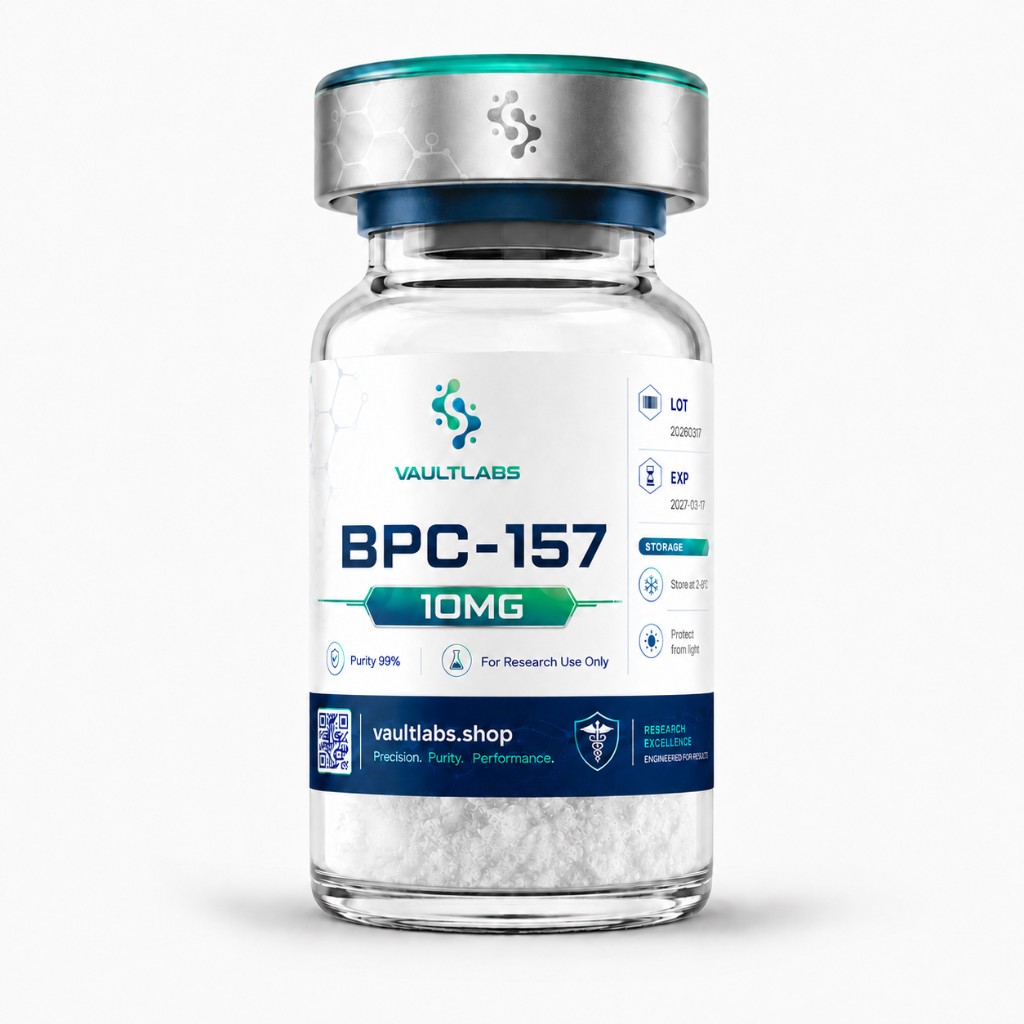
BPC-157 is a pentadecapeptide that appears frequently in in vitro laboratory literature, which means a UAE laboratory ordering it will find a great deal written about the compound and very little written about the practical business of receiving a vial and booking it into an inventory system. This page is about the second thing. It covers identity, catalogue reference, lot records, and handling of the sealed format — and it deliberately says nothing about what the material does in any living system.
Identity before anything else
The name is the first place errors enter. BPC-157 is referred to in various sources by descriptive names and by abbreviations that are not always used consistently, and the abbreviation on a purchase requisition may not be the string printed on a vial. Before ordering, fix a single internal name and record it against the catalogue SKU so that requisition, delivery note, inventory row, and record all read the same. The compound reference page at BPC-157 and the background overview at BPC-157 research overview are the right places to confirm what you are actually specifying.
What the catalogue entry should tell you
A useful listing states the nominal quantity in the vial, the physical format, and the storage condition, and it does not state anything about application. Check the BPC-157 catalogue entry for current specifications, AED pricing, and availability before raising a requisition, because pack size is the field most often transcribed incorrectly. If your institution orders by internal code, map that code to the SKU once and keep the mapping somewhere other than one person's spreadsheet.
Lot records and where to look for them
Analytical records are lot-scoped. A record that describes one production lot says nothing about another lot of the same SKU, however similar the material. VaultLabs publishes per-lot records where they have been uploaded, and the way to check is to enter the lot from the label into the batch verification portal rather than to search by product name. If a lot has no published record yet, ask for it against that lot identifier.
When the record is available, read it in the order that makes it meaningful: names and lot first, method titles second, values third. The general approach is set out in how to read a COA.
Receiving and storing the sealed vial
The handling questions for a lyophilised BPC-157 vial are the same as for any sealed lyophilised research material and are not special to this compound. Follow the printed storage condition, minimise time at ambient conditions between delivery and the cold unit, let a cold vial equilibrate while still sealed before opening, and log the arrival condition of the packaging alongside the lot. Compound-specific notes are collected at the BPC-157 storage guide, and the general physical-format reasoning is at storing lyophilised research materials.
Comparison pages exist so you stop comparing on price
Laboratories new to this category often compare SKUs by price per milligram, which is the least informative comparison available. Where a decision genuinely rests between two materials, use the structured comparisons — BPC-157 against TB-500 is a common one — and record the reasoning in your own qualification file. The decision belongs to your laboratory; the comparison pages exist to make the differences explicit, not to make the choice.
What is not supplied
VaultLabs does not provide preparation instructions, administration guidance, protocol design, or any interpretation of what analytical values imply for a study. That is not a gap in service; it is the boundary of a research-use-only catalogue, set out plainly in the research use policy.
FAQ
Is BPC-157 available for personal use?
No. The catalogue is positioned research-use-only, and material is supplied for laboratory work rather than personal acquisition.
How do I check whether a specific BPC-157 lot has a record?
Enter the lot identifier from the vial label into the batch verification portal. Searching by product name will not confirm anything about the unit in your hand.
Why does the record for my lot differ from one I downloaded previously?
Because each record describes a single production lot analysed on a single occasion. Differences between lots are expected; a record is not a standing specification for all future material.
Can support advise which pack size suits my work?
Support can confirm pack sizes, availability, and lot documentation status. Selecting material for a given piece of work is the laboratory's decision. All material is supplied for in vitro laboratory research only.