
Compound Overviews
GHK-Cu Raw Powder: 1g and 20g Research Formats
Professional guide to VaultLabs GHK-Cu raw powder versus lyophilized vials — identity, lot independence, moisture handling, and analytical qualification for UAE laboratories. Research use only.
3 min read · Updated 2026-06-01 · VaultLabs Research Editorial · Reviewed by VaultLabs compliance review
Featured materials
In the catalogue

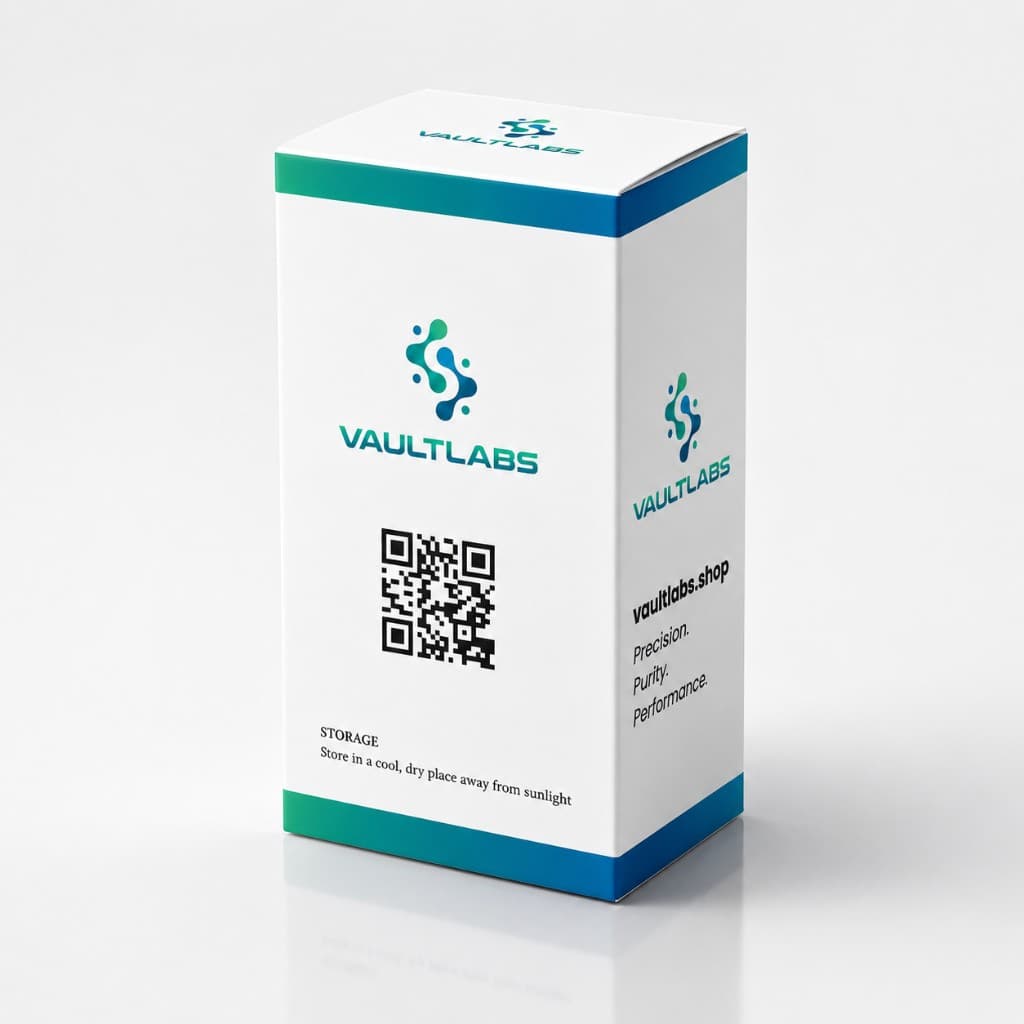


Research use only. For in vitro research use only. Not for human or animal consumption. Not for human consumption, medical use, or personal application.
Compound identity
GHK-Cu is the copper(II) complex of glycyl-L-histidyl-L-lysine (copper tripeptide-1). Catalog identifiers used across VaultLabs presentations include CAS 89030-95-5, molecular formula C₁₄H₂₂CuN₆O₄, and molecular weight 403.92 g/mol. The sequence is Gly-His-Lys with a coordinated copper centre — not a simple mixture of free peptide and copper salt.
A correctly complexed lot is visibly blue-green. That colour comes from the metal complex itself. White or off-white material is a reason to pause receiving qualification and compare the physical lot against its published certificate before the material enters an experiment.
For research and laboratory use only. Not for human consumption, medical use, or personal application.
Raw powder vs lyophilized vials
VaultLabs lists GHK-Cu in two presentation families. Lyophilized vials (50 mg and 100 mg) suit defined single-unit assay work with a fixed nominal mass per sealed vial. Raw powder (1 g and 20 g) is a separate catalog line for laboratories that need bulk copper-tripeptide reference material without repeated vial replenishment.
Both families share the same compound identity and independent lot documentation. A certificate published for a lyophilized lot does not transfer to a raw-powder lot, and the reverse is also true. Procurement records should treat them as related but non-interchangeable catalog lines.
Choosing 1 g, 20 g, or vials
Use vial strengths when your protocol calls for a sealed unit with a fixed nominal mass per container and minimal weighing steps. Choose 1 g raw powder when the laboratory prepares larger working stocks under institutional weighing SOP and has outgrown routine vial replenishment. Choose 20 g when high-throughput or multi-assay programmes prefer fewer open events on parent stock.
Neither format is a cosmetic, supplement, or medicine. VaultLabs supplies both families strictly for in vitro laboratory and analytical research. Format choice is an inventory and workflow decision — not a claim about biological performance.
Analytical qualification notes
Published COA records for GHK-Cu raw powder typically report HPLC purity for the peptide component, with a ≥99% purity target on certificates when testing for that lot is live. HPLC purity alone does not confirm copper stoichiometry. For what the separation itself can and cannot resolve — area per cent as a ratio among detected peaks rather than a census of the vial, and why a chromatogram quantifies without naming anything — see understanding HPLC testing for research materials.
Laboratories that depend on the complex remaining intact should plan confirmatory checks appropriate to their instrumentation — UV-visible absorbance in the copper d-d region and mass spectrometry are routine choices in the copper-peptide literature. Enter the lot number in the VaultLabs batch verification tool rather than relying on a forwarded email attachment.
Moisture, weighing, and Gulf storage
Keep sealed GHK-Cu raw powder at 2–8 °C, protected from light and humidity. Allow the closed container to reach ambient temperature before opening so moisture does not condense onto the powder — especially important in UAE receiving and weighing rooms.
Weigh promptly under controlled conditions, then aliquot into campaign or single-use portions so the parent stock is not repeatedly exposed. Acidic diluents and strong chelators can demetallate the complex after dissolution; confirm buffer composition before preparation. Document first-open and aliquot dates in institutional logs.
Where to order and read more
Browse 1 g and 20 g listings on the GHK-Cu Raw Powder product page for current AED pricing and stock. The GHK-Cu encyclopedia covers shared chemistry; the GHK-Cu Raw Powder UAE page covers commercial and logistics context for bulk formats.
Related reading: Who discovered GHK-Cu, the GHK-Cu research overview, and UAE peptide storage guidance for Gulf climate receiving.