

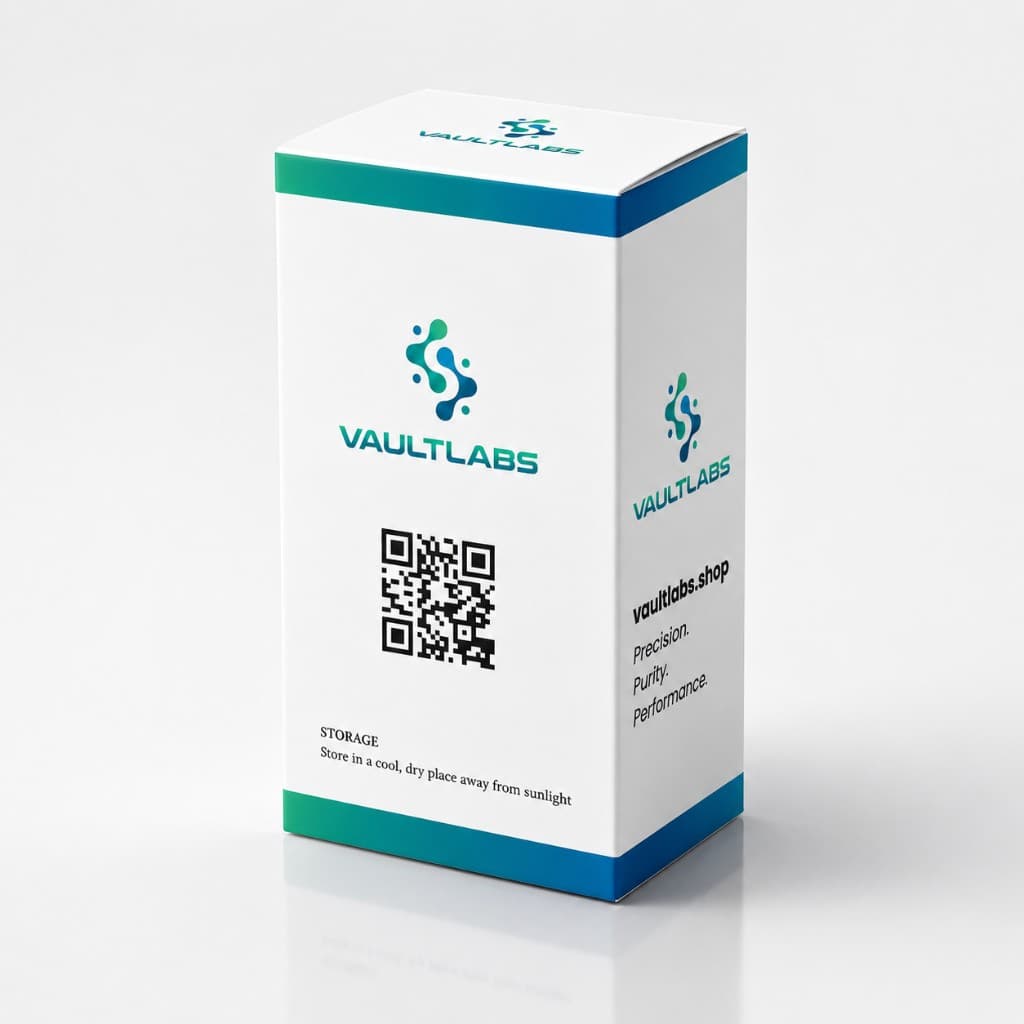
Retatrutide + Cagrilintide 15mg (RETA/CAG)
15 mg blend · LyophilizedVerified 99.89% purity
AED 649
In stockVaultLabs UAE
Featured materials


The pairing is two different receptor classes in one sealed unit. Retatrutide is the triple-agonist sequence VaultLabs otherwise catalogues as GLP-3 RT. Cagrilintide is a long-acting amylin analogue that does not appear in any other VaultLabs SKU. Together they are one manufacturing fill, one lot, and one certificate.
Procurement shorthand is messy. RETA/CAG, RETA-CAG, RetaCag, CagriReta, Cagri/Reta, and “retatrutide cagrilintide blend” all get used for the same idea. None of those strings tells you the masses. The VaultLabs label states the fill in full: retatrutide 12.5 mg + cagrilintide 2.5 mg. If a quotation or a chat message uses a different pair of numbers, it is a different material even when the name matches.
Identity data that does not belong on a buying page — why a blend has no CAS number, and why one purity percentage cannot describe both sequences — sits on the RETA/CAG monograph. The side-by-side with single-sequence retatrutide is the shorter check when a requisition only says Reta.
Other research catalogues fill this pairing at different masses. A 10 mg / 5 mg vial, a 10 mg / 10 mg vial, and a 5 mg / 1 mg vial are all sold under some version of the same nickname. They are not interchangeable with this SKU, and a certificate written for another ratio cannot release a VaultLabs vial.
The unequal fill is the documentation risk. A chromatogram can look clean because the 12.5 mg component dominates the signal while saying almost nothing about the 2.5 mg component. Incoming criteria should ask whether cagrilintide is separately identifiable, and by which method, before the first order — not after a reviewer asks how the minor component was confirmed.
GLP-3 RT 5, 10, 15, 20, and 30 mg are single-sequence retatrutide. They share a compound identity with the larger component of this blend and nothing else — independent lots, independent certificates, independent inventory rows. A Retatrutide UAE overview exists for that line; do not use this page as a substitute for it.
A requisition that reads “reta 15mg” is under-specified. Three neighbouring lines carry the word Reta. None of them is this vial unless the purchase order names both sequences and both masses. Substituting RETA/CAG into a method written for GLP-3 RT is an identity change, not a packaging change.
The papers people attach to this nickname describe each sequence on its own. They do not describe this vial, this ratio, or this manufacturing lot. Adding two literatures together and presenting the sum as a property of the blend is not a sound inference.
VaultLabs therefore makes no statement about what the mixture does in any system. The catalogue decision is documentary: one lot number, one certificate, a fixed ratio. If the design later needs unambiguous single-substance evidence, order GLP-3 RT separately rather than reinterpreting a blend record as a single-component release.
Match the lot on the label to batch verification, or open the same records from the RETA/CAG COA index. A GLP-3 RT certificate must not be applied to a RETA/CAG vial. A component certificate from a single-sequence lot cannot release a composite unit.
On a blend record the useful questions are whether both named components are identifiable and whether the reported ratio matches the label. One main-peak figure is not characterisation of a two-component mixture. The COA interpretation guide is written for that reading. Note whether the analysis is labelled independent-laboratory or supplier-generated while you are in the record.
If the lot is not yet published, raise a documentation request with the lot and order reference and hold the unit. Lot-linked records override generic catalogue copy for the unit in hand.
Current AED pricing and stock sit on the product record. Checkout is in dirhams, inclusive of VAT, and produces an invoice suitable for institutional procurement. Orders leave Dubai within 24 hours, seven days a week, to addresses in all seven emirates.
Sealed vials are stored at 2–8 °C, protected from light and moisture. Transfer them into laboratory storage on the day they arrive — Gulf summer ambient temperatures are not a receiving condition. The research peptide storage guide covers the handover. After the seal is broken, the laboratory’s written procedure is controlling.
Write both components and both masses into the inventory row. A row that only says RETA/CAG 15mg hides the composition from the next person who picks the vial, which is how a GLP-3 RT method and a blend vial end up in the same experiment.
RETA/CAG is supplied for in vitro laboratory research only — not for human or animal use, personal use, or medical application. VaultLabs makes no statements about metabolic or weight-related effects and provides no preparation or administration guidance for living systems.
Buyer obligations are set out in the research use policy. Category context for other research peptides sits on the UAE procurement hub.
All VaultLabs products are supplied strictly for laboratory and research use only. They are not intended for human consumption, medical use, personal use, or diagnostic use.