
 In stock
Research use onlyDubai dispatch · AEDLot 20280309 · Freedom Diagnostics
VaultLabs UAE
Retatrutide pens versus research vials in the UAE
Short answer: VaultLabs supplies retatrutide-class material as GLP-3 RT, sealed lyophilized powder in a glass vial. We do not supply prefilled pens. A pen is a delivery device built for finished human pharmaceutical presentations, which sits outside research-use-only supply entirely. This page explains why the two formats are not interchangeable, how the milligram figures on pen listings compare with vial strengths, and what documentation a lot-tracked vial carries.


Strengths, price and availability
Prices below are the live catalogue figures in AED. Tax and delivery are calculated at checkout.
| Strength | Price | Availability | Documentation |
|---|---|---|---|
| 5 mg | AED 299 | In stock | Published certificate · VL-GLP3RT5-20260917 · VaultLabs Laboratory |
| 10 mg | AED 449 | In stock | Published certificate · 20280309 · Freedom Diagnostics |
| 15 mg | AED 549 | In stock | Published certificate · VL-GLP3RT15-20260917 · VaultLabs Laboratory |
| 20 mg | AED 649 | In stock | Published certificate · VL-GLP3RT20-20260801 · VaultLabs Laboratory |
| 30 mg | AED 849 | In stock | Published certificate · VL-GLP3RT30-20260917 · VaultLabs Laboratory |
| 100 mg | AED 1,899 | In stock | Published certificate · VL-GLP3RT100-20261020 · VaultLabs Laboratory |
- Listed prices are exclusive of VAT. UAE VAT (5%) is added once at checkout on the post-discount merchandise subtotal, the delivery fee, and any payment fee.
- Dispatch: Dispatched within 24 hours, 7 days a week
- Delivery after dispatch: After dispatch: next-day options arrive in 1 UAE business day after dispatch; standard arrives in 4 UAE business days after dispatch.
Current shipping lot
GLP-3 RT 10mg in the UAE
The current published GLP-3 RT 10mg (Retatrutide) shipping lot in the UAE is 20280309. The laboratory named on that certificate is Freedom Diagnostics. Published purity is 99.94% by HPLC-UV / LC-MS, search code Vaul2609221080. VaultLabs dispatches this line from Dubai to all seven emirates with checkout in AED. Janoshik Analytical and METS Lab are named counterparties; they appear on a batch only when that lot has their report. This lot’s published report is Freedom Diagnostics only.
- Lot
- 20280309
- Laboratory
- Freedom Diagnostics
- Purity / method
- 99.94% · HPLC-UV / LC-MS
- Search code
- Vaul2609221080
The short answer: vials, not pens
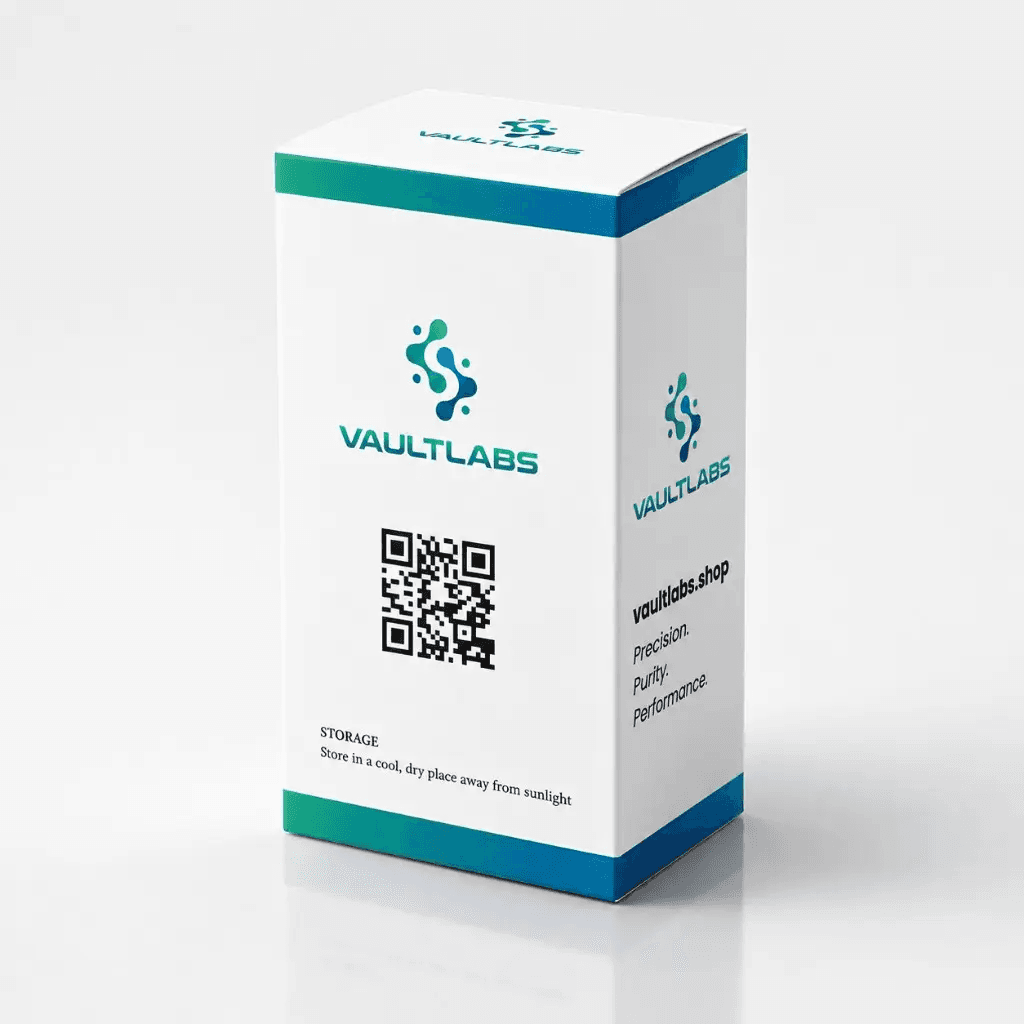
VaultLabs catalogs retatrutide-class research material as GLP-3 RT in nominal 5, 10, 15, 20, 30, and 100 mg lyophilized formats. Both are sealed glass vials of dry powder. There is no pen, cartridge, or prefilled presentation anywhere in the VaultLabs catalog, and there is no plan to add one.
This is a scope boundary rather than a stock issue. A prefilled pen is a finished-format delivery device designed around human pharmaceutical presentation. Research-use-only supply covers reference material for in vitro laboratory work, so a pen format would contradict the terms every VaultLabs lot is supplied under.
If you searched for a retatrutide pen and landed here, the honest answer is that a research supplier is not the right source for that format. What we can supply is documented, lot-traceable reference material on the GLP-3 RT product page.
Why research material is supplied lyophilized
Lyophilized (freeze-dried) powder is the stable form for a peptide in transit and storage. Removing water slows the degradation pathways that shorten the usable life of a peptide in solution, which is why reference material intended to sit in a laboratory freezer arrives dry rather than pre-mixed.
A sealed dry vial also lets the laboratory control the diluent, the concentration, and the record of both — decisions that belong to the receiving laboratory's own SOP, not to the supplier. VaultLabs lists bacteriostatic water separately for exactly that reason.
Sealed GLP-3 RT records specify 2–8 °C storage with protection from light and moisture. The research peptide storage guide covers handling on receipt; the laboratory's validated procedure remains controlling once a vial is opened.
How pen milligram figures compare with vial strengths
Searches like "retatrutide 10mg pen" and "retatrutide 20mg pen" use the same milligram vocabulary as our vial strengths, which is why the two get confused. The number refers to the mass of peptide in the unit, so a 10 mg figure describes the same quantity of material in either format.
What differs is everything around that number. A vial states a nominal dry mass that the receiving laboratory prepares according to its own procedure. A pen implies a fixed, pre-prepared concentration and a metering mechanism — parameters set by whoever assembled it, which a research buyer cannot independently confirm.
VaultLabs publishes the nominal mass, the lot number, and the analytical record for each strength. Match the product, strength, and lot on the physical label against the published record rather than assuming a figure quoted in a listing describes the same thing.
Documentation a lot-tracked vial carries
Every GLP-3 RT unit is inventory-tracked against a lot number printed on the vial label. Enter that number into batch verification to pull the published record for the specific lot in your hand, rather than a generic catalog description. The current 10 mg shipping lot and the laboratory named on that certificate are on the Retatrutide UAE overview and the published GLP-3 RT 10mg certificate.
Published records label their document type — independent analytical laboratory versus supplier-generated. A PDF alone does not establish independent testing, and the COA interpretation guide walks through the identity, purity, and lot fields worth checking before material enters a qualification workflow.
Informal pen listings typically arrive with no lot number, no published certificate, and no route back to an analytical record. That absence is the practical difference between documented research supply and an unverifiable purchase — the supplier evaluation guide covers how to assess this.
Research-use-only boundaries
GLP-3 RT and every other VaultLabs material is supplied strictly for in vitro laboratory research. It is not for human consumption, medical use, personal use, veterinary use, or diagnostic use.
VaultLabs does not provide dosing figures, administration guidance, preparation protocols for personal application, or weight-management information of any kind, in any format. Questions of that nature fall outside what a research supplier can answer.
Buyers are responsible for confirming that their intended use complies with UAE regulations and their institution's review requirements.
Frequently asked questions
No. VaultLabs supplies retatrutide-class material as GLP-3 RT in sealed lyophilized 5, 10, 15, 20, 30, and 100 mg vials. Prefilled pens are a finished human-presentation device format and fall outside research-use-only supply.
Sealed glass vials of lyophilized (freeze-dried) powder at a nominal 10 mg or 20 mg, stored at 2–8 °C and protected from light and moisture. Diluent is not included and is listed separately.
The milligram figure describes the same mass of peptide, but the formats are not equivalent. A vial is dry material with a published lot record that the receiving laboratory prepares itself. A pen implies a pre-set concentration and metering mechanism a research buyer cannot independently verify.
Pen presentation is how finished pharmaceutical products in this class are packaged, so the vocabulary carries over into informal listings. It is a signal worth noting: a supplier offering that format is not operating within research-use-only scope.
Enter the lot number printed on the vial label into the VaultLabs batch verification tool, then confirm the product, strength, lot number, and document type on the returned record match the vial in front of you.
The current published GLP-3 RT 10mg (Retatrutide) shipping lot in the UAE is 20280309. The laboratory named on that certificate is Freedom Diagnostics. Published purity is 99.94% by HPLC-UV / LC-MS, search code Vaul2609221080. VaultLabs dispatches this line from Dubai to all seven emirates with checkout in AED. Janoshik Analytical and METS Lab are named counterparties; they appear on a batch only when that lot has their report. This lot’s published report is Freedom Diagnostics only.
No. All VaultLabs materials are supplied for in vitro laboratory and analytical research only, in every format and to every buyer.
All VaultLabs products are supplied strictly for laboratory and research use only. They are not intended for human consumption, medical use, personal use, or diagnostic use.