

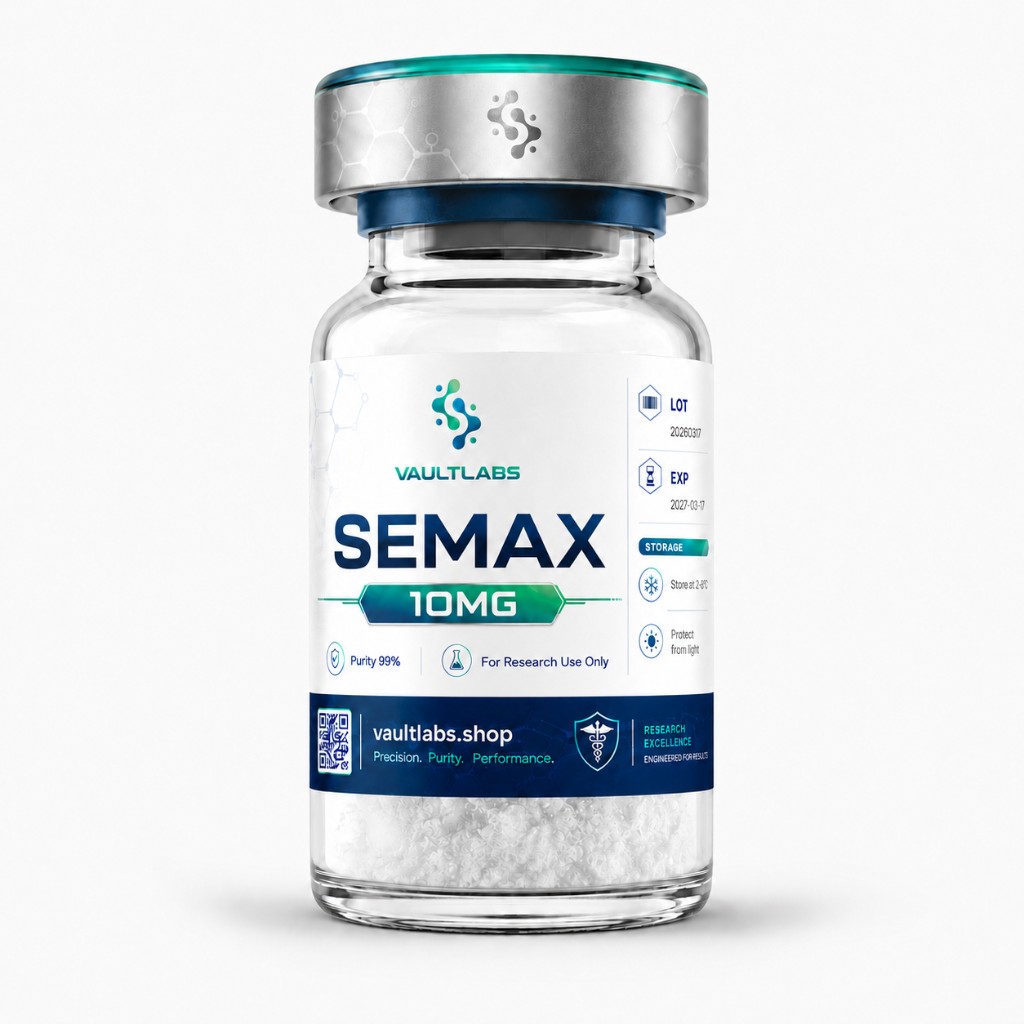
[Semax](/product/semax-10mg) vs Selank shows up in search because both names appear in peptide research catalogs and in the same messy purchase orders. They are not one material. This page keeps the identities apart so a UAE receiving bench does not file two lots under one fridge label.
VaultLabs currently lists Semax 10mg and a Selank + Semax 10mg blend as a separate lot family. The owner supply page is Semax research peptide UAE. If your protocol names Selank only, do not substitute Semax 10mg, and do not treat the blend certificate as a single-sequence Selank record.
Identity first
Write the INN or catalog name the protocol actually uses. Then write the SKU you intend to receive. If those two strings disagree, fix the paperwork before you pay.
On a COA, confirm the identity or sequence field matches the name on the vial. How to read a peptide COA is the general method. A tidy HPLC number on the wrong identity is still a failed receipt.
Why the names get bundled
Procurement sometimes inherits a line from a paper, a forum, or an old quote that said “Semax/Selank.” That slash is the problem. It trains the inventory system to accept either vial.
A second mix-up: modified Semax names (for example N-acetyl or amidate presentations in literature) get shortened to “Semax” on a PO. If you need a specific modification, it must be on the quote.
They are different sequences
The clearest way to stop the substitution argument is to put the sequences next to each other, because they are not variations on one molecule.
Semax is a synthetic heptapeptide, Met-Glu-His-Phe-Pro-Gly-Pro, based on the ACTH(4-10) fragment. Selank is a synthetic heptapeptide, Thr-Lys-Pro-Arg-Pro-Gly-Pro, based on the endogenous tetrapeptide tuftsin. Both came out of the Institute of Molecular Genetics of the Russian Academy of Sciences, and both carry a C-terminal Pro-Gly-Pro tripeptide — which is the real reason they get discussed together and then wrongly filed together.
Sharing a three-residue tail does not make them interchangeable any more than two peptides sharing a molecular weight are the same material. The first four residues differ entirely, so the identity field on a COA will differ, and a document naming one is not evidence for the other.
Note also that literature refers to modified presentations — N-acetyl forms, for example. If your protocol depends on a modification, that string has to appear on the quote, not be inferred from the base name.
Change control when a protocol switches
If a method written against one of these is run with the other, that is a material change and belongs in change control, not in a receiving note.
Write down what changed, which lot replaced which, who approved it, and the date. The common failure is not the substitution itself — sometimes it is justified — but making it informally, so that months later nobody can say which peptide produced which result.
Documentation and inventory
- One inventory row per identity.
- One lot file per vial, checked in batch verification when VaultLabs is the supplier.
- Storage labelled with the catalog name, not “nootropic.”
- ELN crosswalk: literature name → SKU → lot.
If the requisition names Selank only, do not fulfil it with Semax 10mg. The blend SKU is still not a single-sequence Selank certificate.
UAE receiving
Same rules as other lyophilized peptides: out of ambient heat, lot logged, COA filed, research-use invoice language on file (research use policy). The Semax-specific supply checklist is Semax UAE laboratory supply.
VaultLabs does not describe administration, cognitive protocols, or wellness use. Semax is supplied for in vitro research only.
