

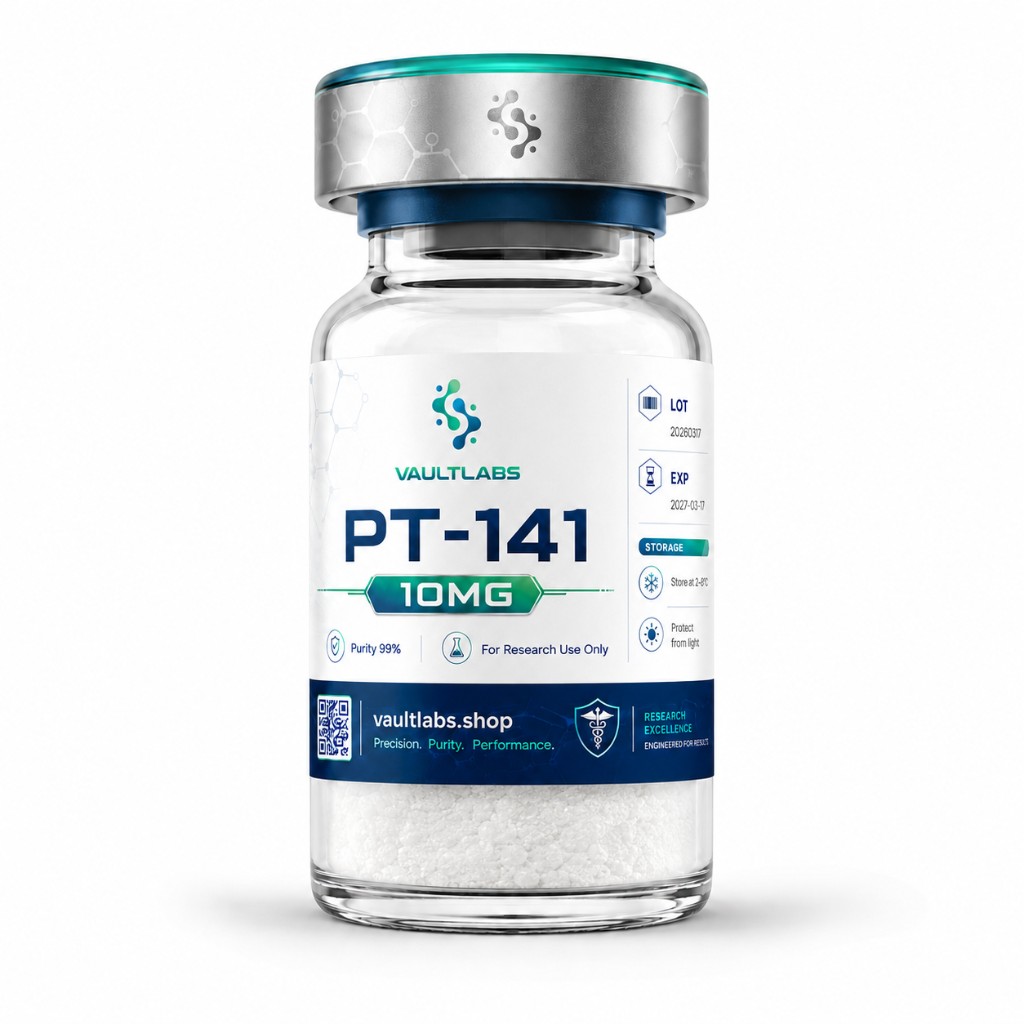
[PT-141](/product/pt-141-10mg) reconstitution searches often want a recipe. VaultLabs will not publish one. Reconstitution volumes, solvents, and handling steps belong in the receiving laboratory’s SOP. This page adds only what is PT-141-specific on our catalog: which SKU you have, which lot file to attach, and which tools exist for arithmetic.
The generic method — documentation, aseptic context, and what we will not specify — is reconstitution basics. The UAE climate and receiving angle is peptide reconstitution guide UAE. The supply landing is PT-141 research peptide UAE.
Lock identity before anyone opens a diluent
Catalog line: PT-141 10mg. Confirm the vial is PT-141, not another melanocortin-class SKU such as MT-2. Confirm the lot in batch verification. File the COA.
If the lot does not match, reconstitution math is irrelevant.
What the calculator is for
The peptide reconstitution calculator converts mass and volume into a concentration number. It does not choose a solvent, does not set a stability window, and does not authorise a use.
Enter the nominal 10 mg only if that is what the vial print says. If your SOP uses a different recorded mass (for example after an in-house weigh), use that recorded mass.
Solvent is an SOP line, not a catalog upsell
VaultLabs lists BAC water and sterile water. Which one a method uses is written in your protocol. Read BAC water vs the compound page and BAC water guide for documentation context. Do not infer a solvent from a product photo.
After reconstitution (documentation only)
- First-open date and operator on the inventory row
- Solvent identity and lot
- Calculated concentration and the calculator inputs you used
- Storage of the opened material per your SOP and the vial label — general sealed-vial storage is the storage guide
VaultLabs does not publish reconstituted hold times for PT-141.
Why the melanocortin shelf causes substitutions
The specific receiving risk with PT-141 is not a bad lot, it is the neighbouring vial. Melanocortin-class research materials sit together in most catalogues and in most fridges, and the names shorten badly in conversation.
MT-2 and PT-141 are distinct catalog identities with distinct lots and distinct COAs. They are discussed in overlapping literature, which is exactly why a requisition that says "the melanocortin one" or an abbreviation someone recognised gets filled with whichever vial is in front of the person filling it. The vial is then correct in the fridge and wrong in the record.
Two habits remove most of this. Write the full catalog name on the requisition even when everyone present knows which is meant, and keep the two on separate inventory rows so that pulling the wrong one requires reading a label that disagrees rather than simply reaching.
What to record before the diluent is opened
The arithmetic is the easy part. What gets lost is the link between the number in the notebook and the vial it came from, and that link cannot be reconstructed later.
Before anything is opened, have the lot identifier, the mass you are treating as the basis for the calculation, and the source of that mass — vial print or an in-house weigh — written down. Those three facts are what make a concentration figure meaningful to anyone who was not standing there.
Then record the diluent as a material in its own right, with its own SKU and lot, not as "water." A preserved and a non-preserved diluent are different inputs, and a record that does not say which was used has not documented the preparation.
Finally, note who performed it and when. Reconstitution basics covers the general documentation pattern; nothing here is PT-141-specific except the identity risk above.
Compliance boundary
No administration routes, no human-use preparation, no “how much to use.” Research use policy. PT-141 is an in vitro research reagent.


