

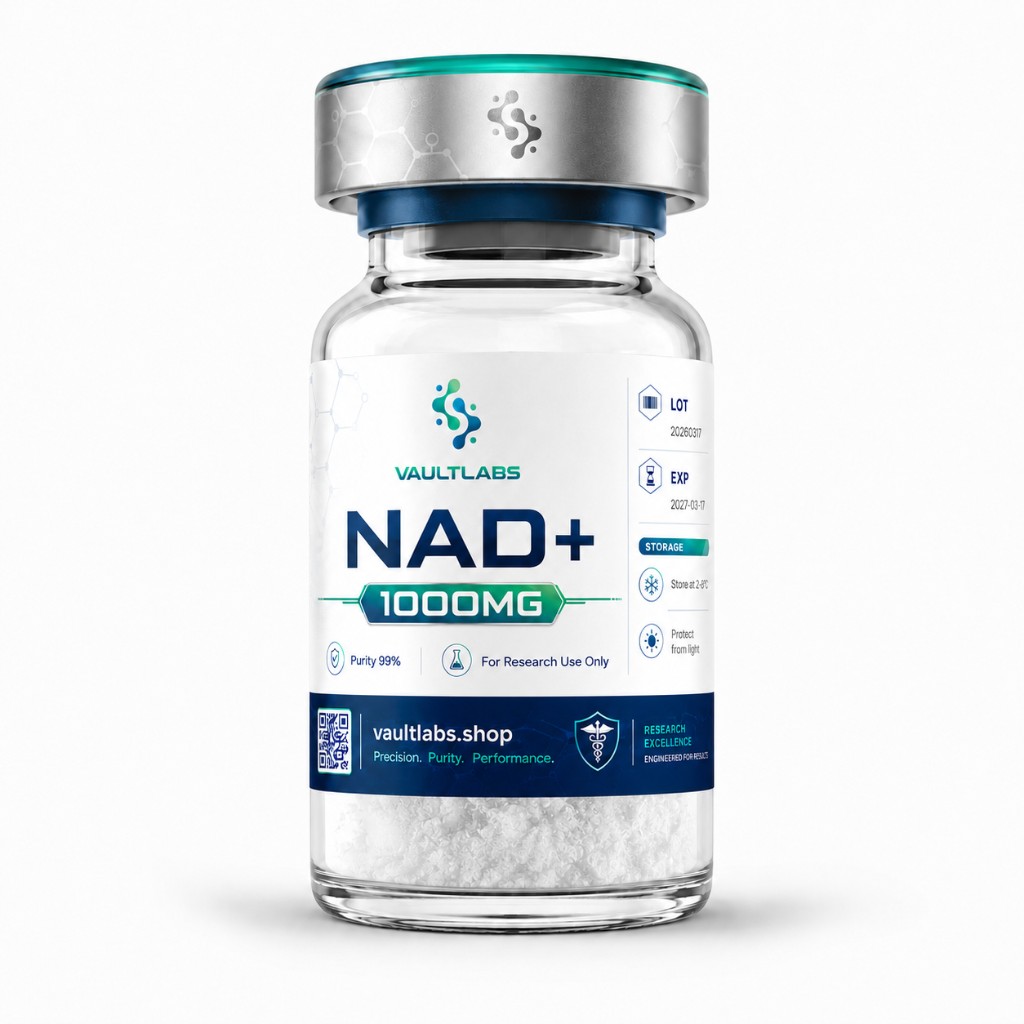
NAD+ 1000mg is the largest single fill in the VaultLabs catalogue, and that one number should change how your laboratory receives it. Everything on the peptide shelf arrives between 100 mcg and 30 mg. This vial arrives at a gram. It is also not a peptide — NAD+ is a dinucleotide coenzyme with CAS registry number 53-84-9, molecular formula C21H27N7O14P2 and molecular weight 663.43 g/mol — so several habits your receiving officers built around peptide vials do not transfer. Identity facts sit on the NAD+ compound monograph; this page covers the receiving, aliquoting, and record-keeping consequences of a bulk fill.
Why the 1000 mg fill changes the receiving workflow
A gram vial is a source for preparing many working stocks, not a single-experiment aliquot. That makes the sub-aliquoting plan a receiving artefact rather than a bench decision: it should exist in writing before anybody breaks the seal.
Decide in advance who opens the vial, into what containers, under what conditions, and how each daughter container inherits the parent lot identifier. The failure mode here is specific and common — a bulk vial is opened opportunistically for one experiment, aliquots are filled into unlabelled tubes, and within a month the laboratory holds material it cannot link to a certificate. The certificate is still on file and it has become worthless.
There is a second arithmetic trap. A 1000 mg fill sits an order of magnitude above the peptide vials on the same shelf. Anyone who assumes the fill weight from habit rather than reading it will be wrong by a factor of ten in the stock-solution calculation, and the error is silent.