

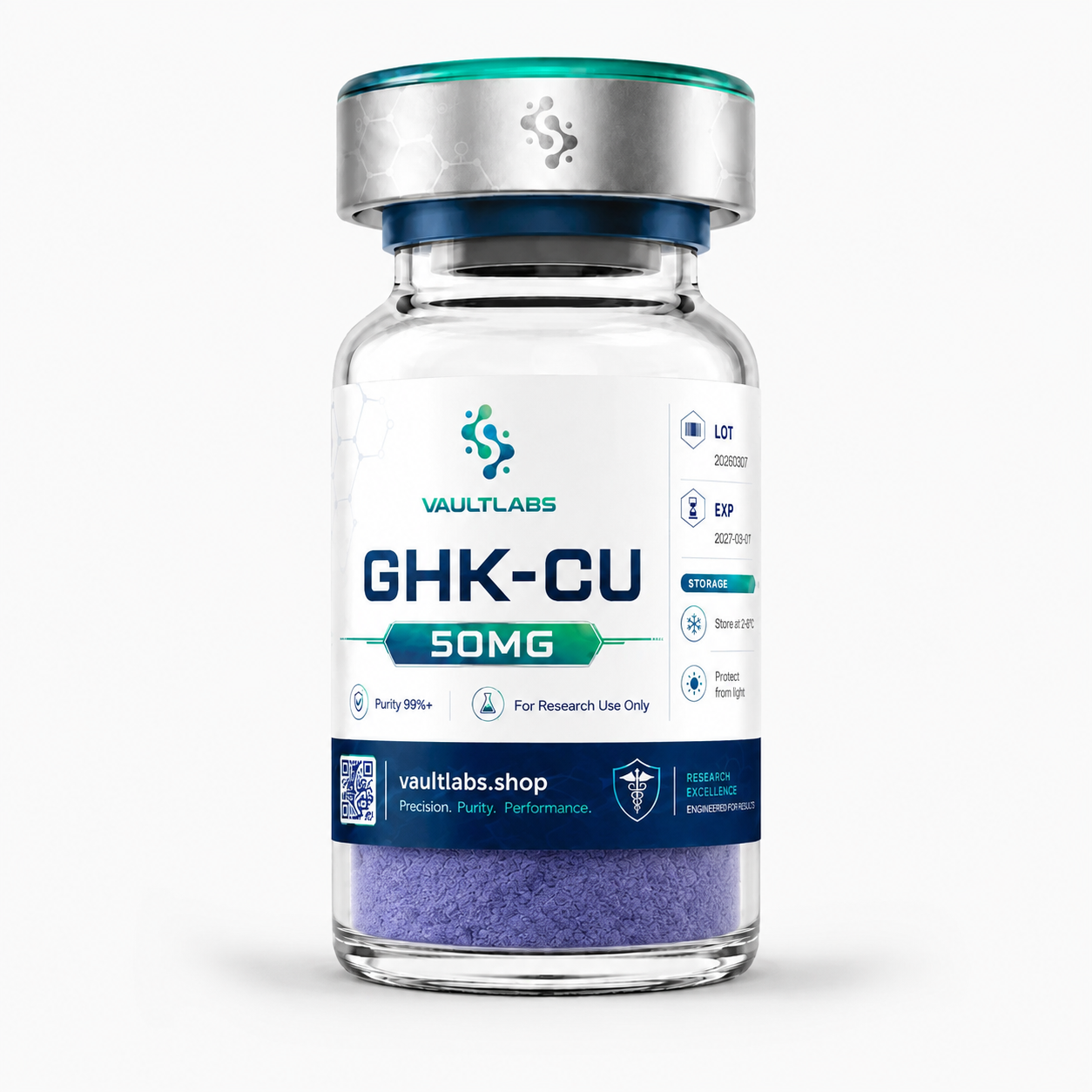
The part of storage that UAE laboratories actually get wrong is rarely the cold unit. It is the twenty minutes between a courier handing over a box and somebody putting it away. Summer ambient conditions here are not a background detail; they are the dominant variable in the whole handling chain, and they act on material at exactly the moment it is least supervised. Everything below is general laboratory storage practice for sealed lyophilised research materials. None of it is application guidance.
The interval between the door and the cold unit
Write down a maximum. Whether your site chooses fifteen minutes or an hour is less important than the fact that a number exists and somebody owns it. Without one, a parcel arriving at 14:00 in July becomes a reception-desk item until the named person returns from lunch, and no log will ever record that it happened.
The practical fix is procedural rather than technical. Name a receiving officer and a deputy, agree a delivery window rather than accepting any window, and give reception a written instruction that these parcels are not held. Read shipping and storage before the first order so the handover expectation is agreed in advance rather than negotiated on a hot afternoon.
Follow the printed condition, not the site habit
Most sealed lyophilised peptide vials specify a refrigerated range, protected from light and moisture. Some lots specify otherwise. The rule that survives an audit is simple: the label and the lot record govern, and any site-wide deviation has to be written down against the SKU before it is applied. "We put everything in the freezer" is a habit, not a policy, and it fails the first time somebody asks for the written basis. The broader decision framework is set out in the research peptide storage guide.
Humidity is the variable that gets ignored
Temperature is monitored because thermometers are cheap and familiar. Humidity usually is not, which is unfortunate, because a lyophilised cake is hygroscopic by design and coastal humidity in this region is high for much of the year. The exposure event is almost always the same: a cold vial is brought into a warm, humid room, condensation forms on and around the glass, and the container is opened before it has equilibrated. Letting a unit reach room conditions while still sealed costs a few minutes and removes the most common avoidable moisture exposure. The failure modes are catalogued in peptide storage mistakes.
Siting the cold unit sensibly
A refrigerator that reads correctly at nine in the morning is not the same as a refrigerator that holds its range at three in the afternoon in August with staff opening it every ten minutes. Keep units away from external walls, direct sun, and doorways. Avoid door shelves entirely for anything lot-tracked — they are the warmest and most variable part of the cabinet. And do not use a domestic appliance in a corridor as a laboratory store, however convenient it is.
Monitoring you could actually show an auditor
Continuous logging with recorded minimum and maximum values answers the question that matters — did this unit hold its range over the last quarter — which a dial thermometer checked when somebody remembers cannot. Decide in advance what constitutes an excursion and what happens when one occurs, because deciding afterwards with a qualified lot in the balance is how excursions get reasoned away. Power interruptions deserve the same written handling: the relevant question is not whether the unit recovered but how long it was out and whether anyone recorded it. The interactive version of this reasoning is at the peptide storage tool, with regional context in cold chain research supplies UAE.
Write the summer plan in winter
Sites that cope well with July are the ones that wrote the plan in February. Agree the reduced delivery windows, the backup unit, the escalation contact, and the excursion procedure while nothing is urgent. Material-specific notes for the physical format are covered in storing lyophilised research materials, and the regional storage overview sits at peptide storage UAE.
FAQ
Does a parcel need to go straight into the fridge on arrival in Dubai?
Follow the storage condition printed on the vial and any note on the lot record. The general practice is to minimise the time the sealed unit spends at ambient conditions and to log the arrival time.
Is a freezer always safer in this climate?
No. Freezing introduces cycles and condensation risk that refrigerated storage does not, and it is only appropriate where the label or lot record supports it and your written policy allows it.
Does VaultLabs supply storage equipment or validate our units?
No. VaultLabs supplies research materials with lot records where published. Storage infrastructure, monitoring, and qualification are the laboratory's responsibility.
What should be logged at receiving?
At minimum the arrival time, the condition of the packaging, the lot identifier, and the unit the material was placed in. Everything here concerns material supplied for in vitro laboratory research only.