
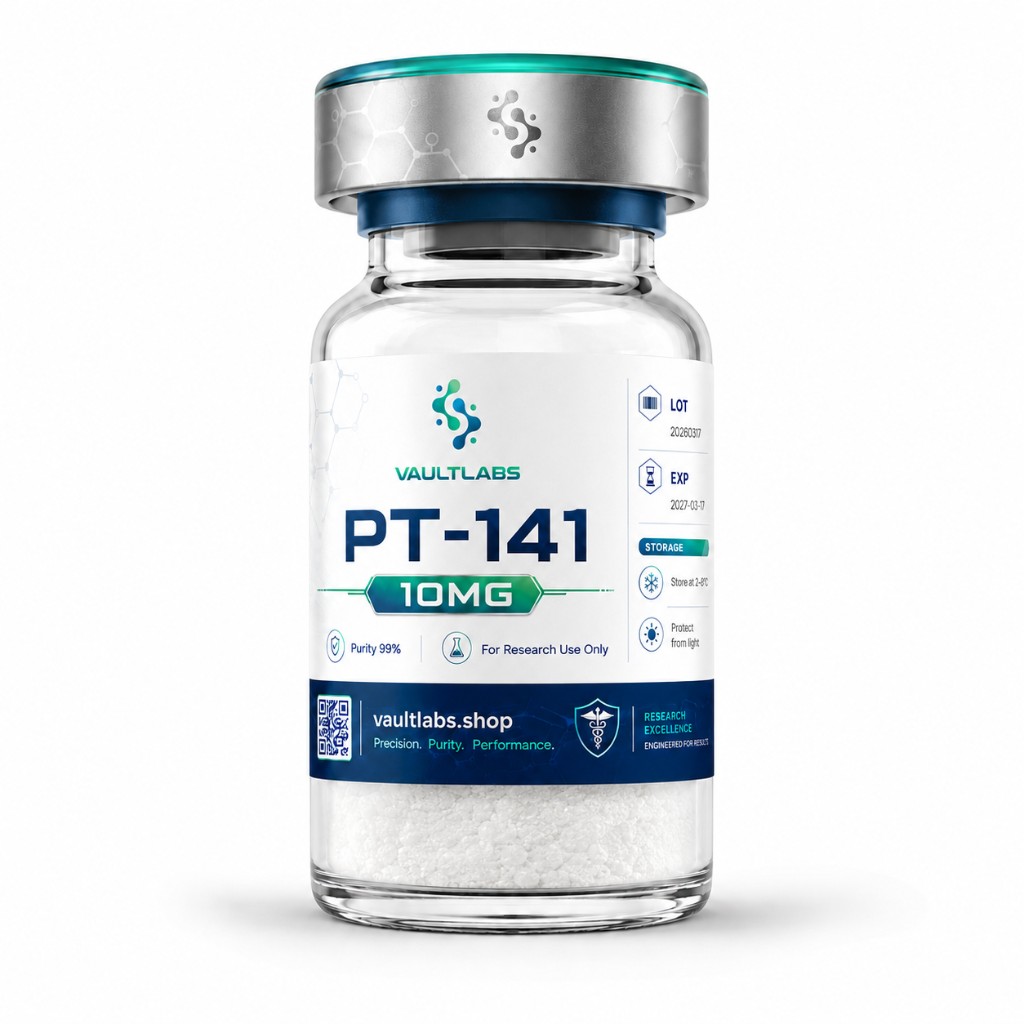
PT-141 is the one SKU in the VaultLabs catalogue where the same molecule carries a development code and a generic name in equal circulation. The vial is printed PT-141 10mg; the literature also calls it bremelanotide. They are one compound with one registry identity, CAS 189691-06-3, a cyclic peptide of the alpha-MSH analogue lineage supplied as a white lyophilised powder at a 10 mg catalogue fill. Two names on one material creates two distinct receiving hazards: a duplicate inventory row, and a purchase line nobody can match to an invoice. The identity record belongs to the PT-141 compound monograph; this page handles the catalogue and documentation side.
The duplicate-row problem
When two names circulate for one material, an inventory system will eventually hold both. Someone enters bremelanotide against a new lot because the certificate or the paper used that name, the PT-141 row already exists, and the laboratory now shows two materials where there is one. Stock counts drift, and worse, a lot gets attributed to the wrong row.
The fix is a single canonical row keyed to the printed catalogue string, with the alternate name recorded as a synonym field on that row rather than as a row of its own.
Do not let the approved-medicine fact confuse the file
Bremelanotide is an approved medicine in the United States under a specific indication. VaultLabs research material is not that product and is not supplied for human use.
Both halves of that statement need to survive into your internal record. Purchasing teams occasionally read the first half and conclude that ordinary pharmaceutical handling conventions apply, or that a manufacturer specification sheet can substitute for a lot certificate. Neither follows. What arrives is a research reference material released against its own lot documentation. Because this is a compound that attracts non-research enquiries, the order file should show the research aim, the approving signature, and the workflow the lot entered. The relevant terms are collected in the documentation centre.
Shelf separation from melanotan II
MT2 (Melanotan-2) 10mg sits nearby at the same nominal fill. PT-141 is a metabolite of melanotan II in structural terms — the C-terminal amide of MT-II is replaced by a carboxylic acid — and the two are cited alongside each other throughout the melanocortin literature. See the MT-2 compound monograph for that material's own identity record.
Structural proximity plus identical fill weight plus adjacent shelf position is a mis-pick waiting to happen. Separate the containers physically, not merely in the spreadsheet, and print the lot identifier on every daughter container so an aliquot can never be traced to the wrong parent.
Why cyclic structure matters when you read the certificate
Ring closure constrains conformation, which affects chromatographic behaviour. The practical implication for receiving is that a linear impurity or a ring-opened degradation product is a distinct chemical species worth resolving, not a trivial variant of the parent.
So read the impurity profile and the analytical methods named, rather than stopping at the headline purity figure. Two lots with the same purity value and different impurity profiles are not equivalent inputs to a validated workflow. Reconstitution-adjacent documentation conventions are covered in PT-141 reconstitution research notes.
The four strings to match before release
Before the vial leaves quarantine:
- Catalogue SKU on the invoice against the printed name and nominal mass on the vial.
- Lot identifier on the vial against the lot identifier on the certificate.
- Registry identity on the certificate against the compound your protocol names.
- Storage line on the label against the location the vial is actually going into.
VaultLabs publishes per-lot COA records in the batch portal once uploaded. Enter the lot through batch verification at receipt rather than retrospectively. If no published record exists for a lot yet, hold the vial; a paperwork gap resolved after the material has entered a workflow is not resolved at all.
UAE receiving specifics
Pricing and checkout are in AED, and dispatch covers the seven emirates. Log SKU, lot, and time of signature at handover, then move the parcel into cold storage before opening the documentation. The commercial and supply path for this compound is PT-141 research peptide UAE, and emirate-level documentation notes sit on the PT-141 research peptide UAE guide.
FAQ
Are PT-141 and bremelanotide two different materials?
No. PT-141 is the development code and bremelanotide is the generic name for the same molecule. Keep one inventory row against the printed catalogue string and record the alternate name as a synonym on that row.
Can a manufacturer specification sheet stand in for the lot certificate?
No. A specification describes a grade; the certificate describes the lot in your fridge. Receiving reconciles against the lot record, and only the lot record supports later attribution of a result.
How should PT-141 and MT2 be stored relative to each other?
In physically separate positions with separate inventory rows. They share a 10 mg nominal fill and a close structural relationship, which is exactly the combination that produces mis-picks.
What is worth checking on the certificate beyond purity?
The analytical methods named, the lot identifier, the date, and the impurity profile. For a cyclic peptide, a ring-opened species is a distinct compound rather than a minor variant, so the profile carries real information.
PT-141 supplied by VaultLabs is for in vitro laboratory research only.
