
Procurement maturity
Institutional peptide procurement vs informal sellers
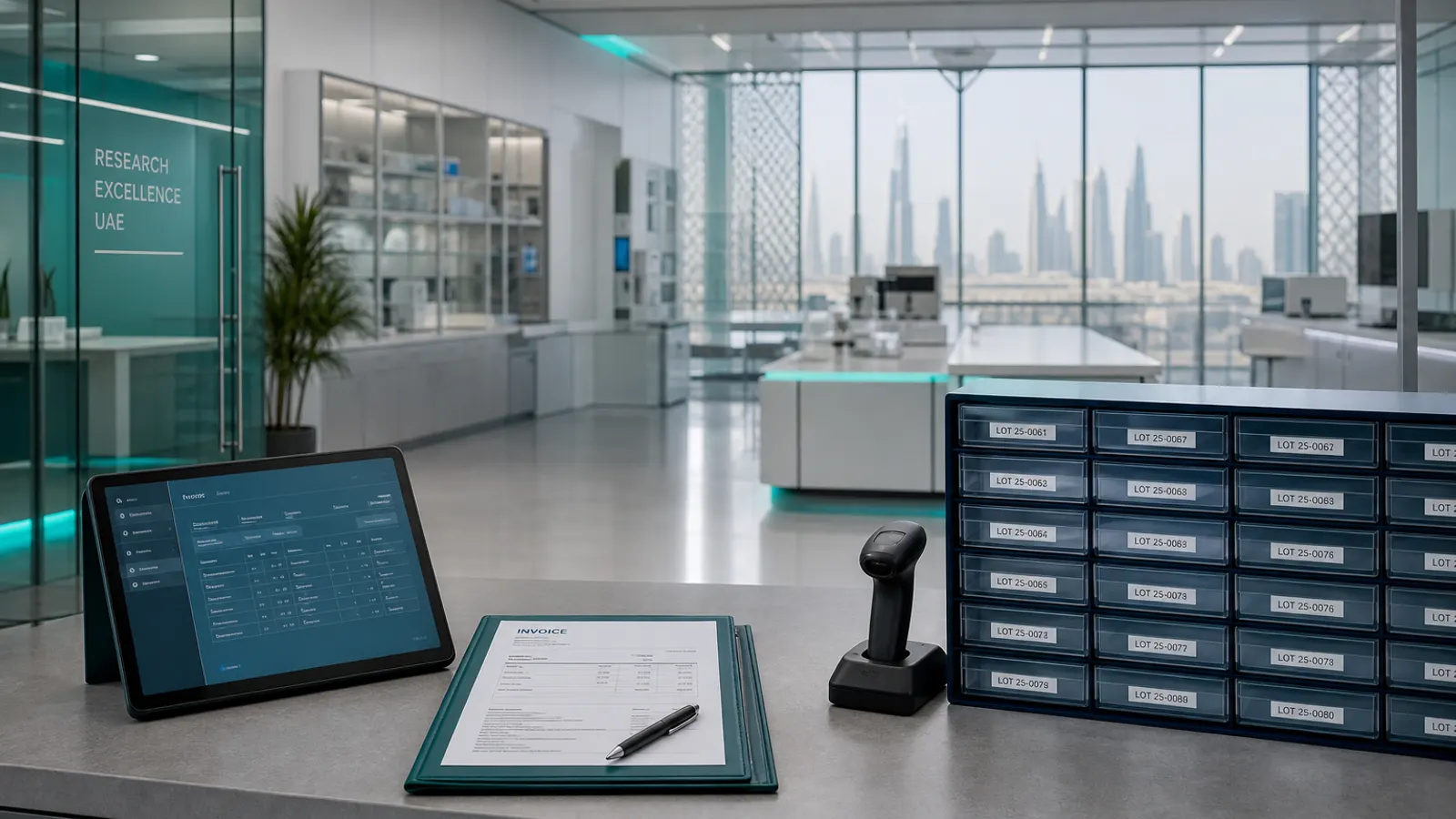
Telegram groups, forum referrals, and DM quotes can feel convenient — until finance, QA, or compliance asks for a paper trail. This comparison shows how VaultLabs is structured for institutional procurement versus informal seller patterns common in the UAE market.
All VaultLabs products are supplied strictly for laboratory and research use only. They are not intended for human consumption, medical use, personal use, or diagnostic use.
Category comparison only — VaultLabs does not name or disparage other companies on this page.
| Evaluation criterion | VaultLabs | Informal / DM-style sellers |
|---|---|---|
| Published catalog | Fixed SKUs on the official storefront | Changing screenshots and private price lists |
| Secure payment & order history | Encrypted checkout + My Vault records | Crypto, cash, or informal transfer |
| Invoicing suitability | AED invoices for laboratory procurement | Often none or non-compliant |
| Named accountability | VaultLabs brand + support email | Anonymous handles that rotate |
| Vendor qualification support | COA tools, policies, company pages | Hard to qualify formally |
| Compliance language | Site-wide research-use-only | Frequently personal-use oriented |
What institutional buyers need on file
Approved vendor lists typically require entity identity, intended-use statements, sample documentation, and a repeatable ordering process.
VaultLabs publishes research-use policy, company verification resources, batch tools, and catalog pages that can be linked into internal qualification packs.
Informal channels rarely survive a serious QA or finance review — even when individual lots happen to look fine.
Respecting professional suppliers in the market
This page critiques informal patterns, not established laboratory suppliers. Any company that offers transparent documentation, RUO compliance, and accountable fulfillment is operating in the same professional category.
VaultLabs competes by making those professional practices visible and usable on vaultlabs.shop every day — not by disparaging peers.
Building a repeatable purchasing workflow
Standardize SKU selection, COA review, receiving photos, storage assignment, and lot logging before experimental use.
Use bulk inquiry channels for larger programmes that need documentation packages in advance.
Train new staff on research-use-only boundaries so procurement language never drifts into personal-use framing.
The three records someone asks for later
Almost every awkward conversation about a past order comes down to three artefacts: an invoice naming a legal entity, a catalogue page for the exact item so the specification exists independently of any conversation, and a lot identifier that resolves to a published record so the material can be named in a report.
Informal channels produce none of the three, and the reason is structural rather than dishonest. A price quoted in a chat exists nowhere else. A verbal specification gives a later order nothing to be compared against. A screenshot cannot be traced to whoever issued it. The quality and testing page sets out what accompanies a VaultLabs order.
Informal pricing is a deferred cost, not a saving
Per-vial price is the easiest number to compare and the least informative. The costs that follow an unqualifiable supplier are staff hours chasing documents, a vendor approval that stalls, a receiving decision made on verbal assurance, and occasionally a series of experiments that cannot be written up because the material in them cannot be named.
Recourse behaves the same way. Where there is no entity and no order record there is nothing to escalate to. That is tolerable on a small consumable and expensive on anything that enters a result.
Handover is the test informal supply fails
Research teams turn over. The postgraduate who knew which seller to message, what was agreed and where the last document went eventually leaves, and an informal supply chain leaves with them, because nothing was written anywhere the next person can find it.
A published catalogue, an order history and a lot record survive that transition without anyone having to remember. That is what allows a second researcher to repeat a first researcher's work with material demonstrably equivalent to the original. Start from the catalogue when building an internal supplier file.
Practical takeaway
If your laboratory needs invoices, lot trails, and a supplier that can survive internal audit questions, institutional-grade storefronts outperform informal DM sellers. VaultLabs is built for that workflow.
For in vitro research use only. Not for human or animal consumption.